A Beginner's Guide to Managing Awards & Contests in 2026
A comprehensive, modern playbook for launching fair, credible and scalable awards in the creative industries.
Published on January 15, 2026
Estimated read time: 15 mins
 Oz Osbaldeston
Introduction: Why Running Awards Is Both Easy and Hard
Running a successful awards programme or contest in 2026 is, paradoxically, both easier and harder than ever.
It's easy because the tools now exist to make submissions, payments, judging, communications, and reporting smooth and largely automated — if you use them properly. The technology is there. You no longer need to reinvent the wheel.
It's hard because:
- There are more creative opportunities than ever. Awards, grants, residencies, open calls — your programme is competing for attention in a crowded landscape.
- The proliferation of AI-generated work means organisers must apply greater scrutiny, clearer criteria, and more thoughtful processes.
- Entrants are more cautious, more informed, and less forgiving of opaque or amateur setups.
This guide is for organisers who want to do this properly. You can run awards or contests on a small budget, but standing out requires intentional differentiation, not just good intentions. You shouldn't do it "on the cheap", half-heartedly, or think it will be easy to get lots of entries just by listing on a couple of sites.
Common Mistakes That Undermine Awards Early
Let's start with the easy bit: what organisers get wrong, as there are some usual suspects here.
1. Pricing It Wrong: Too High or Too Low
One of the most common and most damaging mistakes is getting the pricing wrong.
- Too expensive, and you exclude the very communities you may be trying to support.
- Too cheap (or free without structure), and you risk being overwhelmed with low-quality submissions and unsustainable admin.
We've seen both, and it's vital that you get it right because once an opportunity is announced, rolling back a fee or changing from free entry is difficult. It looks very unprofessional and quickly erodes trust.
Getting the balance right requires:
- Understanding your audience's financial reality
- Knowing how many submissions you need to break even
- Being honest about what your programme offers in return
2. Assuming People Will Find You
Unless you already have a captive audience, marketing must be designed — not assumed.
Great awards fail quietly when discovery is treated as an afterthought.
3. Asking for Too Much Information
A common misconception is that long forms with lots of in-depth questions produce better submissions. They don't. They produce fewer.
Every unnecessary question compounds friction, especially for under-resourced, time-poor, or neurodivergent applicants. Scrutinise every question, whether it's fully necessary or whether it can be merged with another etc.
4. Running Awards "On the Cheap"
It is technically possible to run awards using:
- A Google Form
- A submissions@ Gmail address
- A spreadsheet
- A PayPal link
But this setup is not scalable, not professional, and not trustworthy.
Hidden costs appear quickly:
- Freelance admin time
- Payroll costs
- Manual errors
- Lost submissions
- Judge frustration
In the long run, cheap setups like using free form builders or trying to use an email inbox will cost more in both money and reputation.
5. Poorly Defined Categories
Categories are structural decisions, not labels.
Incorrect or vague categories make judging harder, skew outcomes, and complicate reporting.
Correct categorisation ensures:
- Fair comparisons
- Specialist judging
- Clean filtering and sorting later
Start With the End in Mind
Before platforms, branding, or marketing, or anything really, ask yourself a very simple question:
What decision are you trying to make?
Every strong awards programme or contest begins with clarity on selection. Make sure everyone in your team and all your judges are aligned on what it is that makes a winning selection. It seems obvious but so many organisations assume they know this already without communicating to all the relevant stakeholders.
Define Success Before You Design the Process
Ask yourself:
- What does a winning submission actually demonstrate?
- What evidence do judges need to make a confident, fair decision?
- Who must be convinced — judges, funders, sponsors, audiences?
If you can't clearly explain how winners are chosen, your process will inevitably drift.
Clarity here leads to:
- Shorter, more focused forms
- Fairer judging
- Fewer disputes
- Stronger credibility
Setting Prices: A Strategic, Not Emotional, Decision
Pricing an awards programme is one of the hardest decisions you'll make and one of the easiest to get wrong.
It's tempting to treat pricing as a simple question of "What will people pay?"
In reality, it's a balancing act between sustainability, access, credibility, and risk.
Start With Your True Costs (Not Just the Obvious Ones)
Before setting a single price, you should understand the full cost of running your awards.
Common cost categories include:
- Platform and technology costs
Submissions software, payment processing fees, storage, integrations, and support.
- Staff time and admin
Even if work is done internally, time has a cost. Admin, moderation, communications, troubleshooting, and reporting add up quickly.
- Marketing and promotion
This may include:
- Paid advertising (social, search, listings)
- Design assets
- PR support or press outreach
- Sponsored posts or partnerships
- Judging costs
Are judges paid, reimbursed, or compensated in other ways? Even unpaid judges require onboarding, support, and tooling.
- Prizes and awards
Cash prizes, production costs, trophies, certificates, shipping, events, or exhibitions.
- Ceremony or announcement costs
Venue (if not just online), streaming, production, hosting, or post-production.
- Contingency
Unexpected costs are inevitable. A 20–30% buffer is not excessive — it's realistic.
If you don't account for these early, pricing becomes guesswork.
Lay Out the Marketing Budget Explicitly
Marketing is often under-budgeted or ignored entirely — until submissions don't arrive.
Be clear about:
- How much visibility you need
- Which channels you plan to use
- Whether promotion is organic, paid, or partnership-led
It's a delicate balance: a lower submission fee often requires more marketing to achieve volume but too high and no amount of marketing will help.
Prize Money: Where Does It Actually Come From?
Prize money must be funded intentionally.
Common sources include:
- Submission fees
- Sponsorship
- Grants or public funding
- Internal budgets
- Donations or partnerships
If prizes rely on submission income alone, you'll need to model carefully to avoid shortfalls.
Estimating Submissions (Especially in Year One)
First-time awards face the hardest uncertainty: volume.
To reduce guesswork:
- Research similar awards in your field
Some organisations openly share how many submissions they received. Others may tell you if asked politely.
- Look at:
- Audience size
- Geographic reach
- Price points
- Brand recognition
- Be conservative
Optimism is natural, but overestimating volume is risky.
In the affordability climate of 2026, every penny counts, so do the research first. Checking similar awards and contests is a good place to start. What are they charging? What are their prizes? Do you think their pricing is justified? If you were entering their contest, would you pay the entry fee?
Entry fees tend to vary considerably based on the industry. A literary magazine contest may have a smaller entrance fee than say, an art contest and almost certainly less than some business awards, so bear that in mind.
Model Best, Expected, and Worst-Case Scenarios
Create a simple model that includes:
- All costs
- Different price points
- Different submission volumes
Then flex it across scenarios:
- Best case: strong marketing, high uptake
- Most realistic case: modest awareness, steady growth
- Worst case: low volume, higher admin per entry
Ask:
- Do we break even?
- Where do we lose money?
- Where do we price people out?
Seeing the numbers clearly often reveals uncomfortable truths but it also prevents bigger problems later on down the line. Use AI to help with this too. Run your workings through an AI chatbot to see what feedback it might give you.
Pricing Is a Living Decision
Pricing doesn't need to be perfect in year one but it shouldn't just be finger-in-the-air stuff. Think long term too - what can we learn from this to cement this as a fixture in the audience's calendars.
Many successful programmes:
- Start conservatively
- Adjust pricing year-on-year
- Introduce early-bird tiers
- Layer in sponsorship once credibility is established
The goal is not to maximise revenue at all costs — it's to create a programme that can exist, improve, and grow.
Get pricing right, and everything else becomes easier.
Reducing Friction: Ruthlessly Audit Every Drop-Off Point
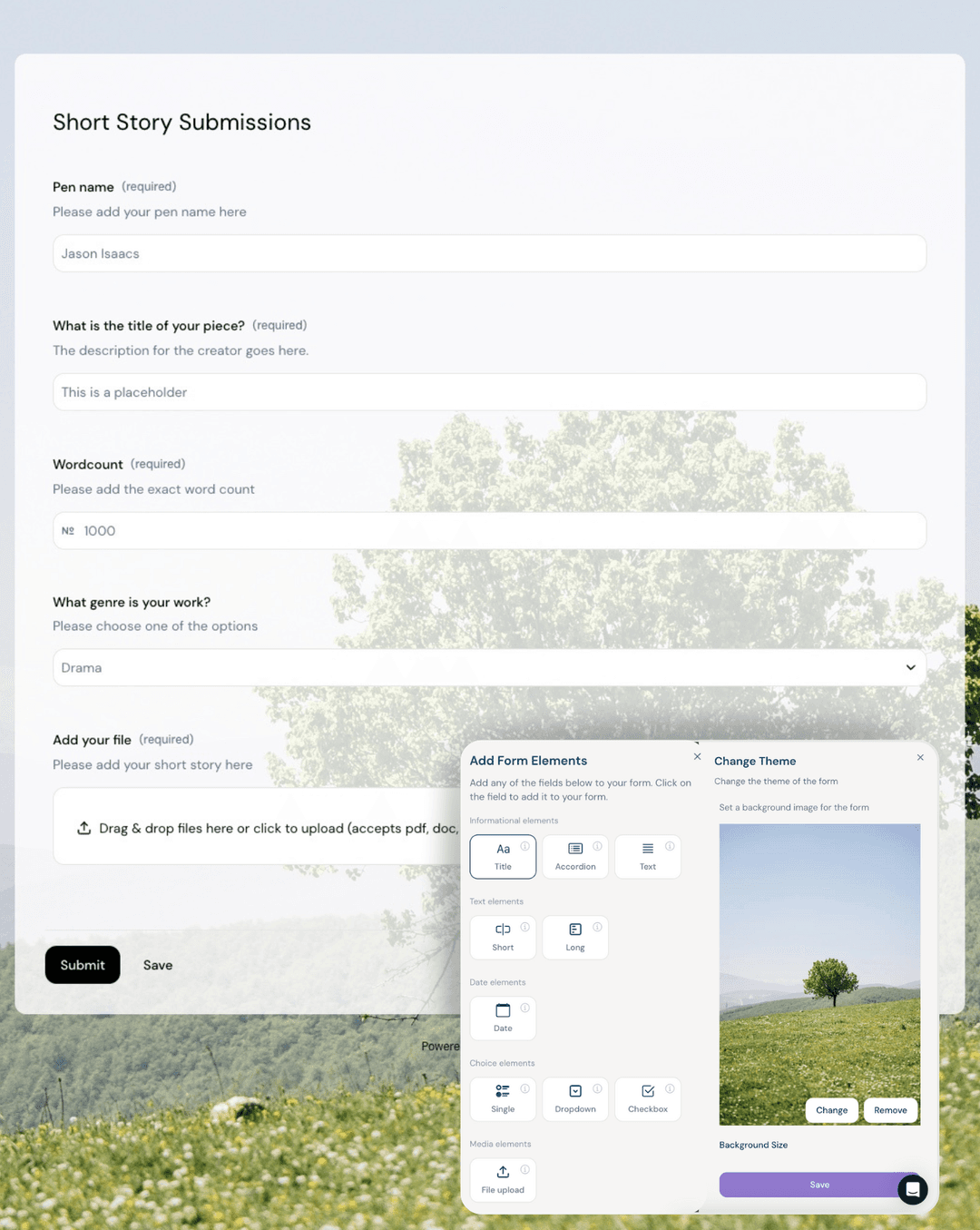
If you're charging a submission fee (and especially if it's a meaningful one), you're asking people to do two hard things at once:
- Invest time
- Part with money
That means your submission flow should be treated like ecommerce checkout — because functionally, it is.
In ecommerce, brands obsess over the smallest details that influence conversion: button placement, page load times, form length, errors, unexpected steps, even the wording on a payment field. Awards should be no different. Every extra click, every confusing instruction, every "I'll do this later" moment increases drop-off.
And here's the uncomfortable truth:
The longer someone spends in your form, the more likely they are to abandon it.
Not because they dislike your awards — but because life happens. Interruptions happen. Doubt creeps in. The friction compounds.
Treat Your Submission Journey Like a Conversion Funnel
Don't think "we have a form." Think "we have a funnel."
Typical funnel stages:
- View competition page
- Start application
- Create account / log in
- Upload work / answer questions
- Reach payment
- Pay
- Submit successfully
Every stage has drop-off — your job is to reduce it.
The Friction Audit: What to Refine
Be deliberately paranoid about these:
- Too many steps / too many tools
If applicants have to bounce between PayPal, emails, external forms, and transaction IDs, you're bleeding submissions.
- Unexpected requirements
Don't surprise people halfway through with "upload X" or "format Y" or "this must be a PDF." Tell them upfront.
- Account creation at the wrong moment
If you force account creation too early (or too painfully), people bail. Make it smooth and minimal.
- Slow pages / heavy uploads
Large media uploads are a drop-off magnet. Use clear progress indicators, encourage URL links where possible and allow saving drafts.
- Vague fields and unclear language
Confusing questions cause hesitation — hesitation causes abandonment.
- Mobile experience
A huge portion of people discover opportunities on mobile. If the form is painful on a phone, conversion suffers.
The Goal: Fewer "Decision Points"
Every time someone has to stop and think ("What do they mean?" "Where do I find that?" "Do I have time?" "Is this worth it?") you introduce a chance they quit.
Reduce decisions by:
- Using clear labels and examples
- Keeping questions short
- Structuring the form into digestible sections
- Showing progress ("Step 2 of 4")
- Allowing drafts by default
Draft submission is money left on the table
If someone starts an application and doesn't finish, that's not just an admin metric — it's lost revenue and lost opportunity.
In ecommerce, abandoned baskets are treated like gold dust because they represent high intent. Draft submissions are the same: someone wanted to apply, and something got in the way.
Use "Abandoned Basket" Thinking: Recovery Automations
Set up automated reminders for incomplete submissions, for example:
- 1 hour after abandoning: gentle nudge ("Your draft is saved")
- 24 hours after: highlight value (prize, judges, deadline)
- 72 hours after: add urgency (deadline, early bird ending)
- Final reminder close to deadline: short and direct
Make these emails helpful, not naggy:
- Include a one-click link back to their draft
- Summarise what they've already completed
- Remind them what's in it for them
- Offer support if they're stuck
If fees are involved, recovery can also include:
- Early-bird deadline reminders
- Limited-time discount offers (used carefully)
- "Need help finishing?" personal support prompts
Test Your Own Process Like a Cynical Entrant
The best friction audit is brutally simple:
- Start from your website like you've never heard of your awards
- Apply on mobile
- Apply on slow Wi-Fi
- Apply when you don't have everything ready
- Apply as someone who is unsure about paying
If anything feels confusing, slow, or annoying — fix it. Because entrants will not power through friction out of goodwill. They'll just leave.
A smooth submission journey doesn't just increase applications.
It increases revenue, improves entry quality, reduces admin, and builds trust — all at once.
Categories, Rounds, and Scale: Creating Structure That Actually Helps People
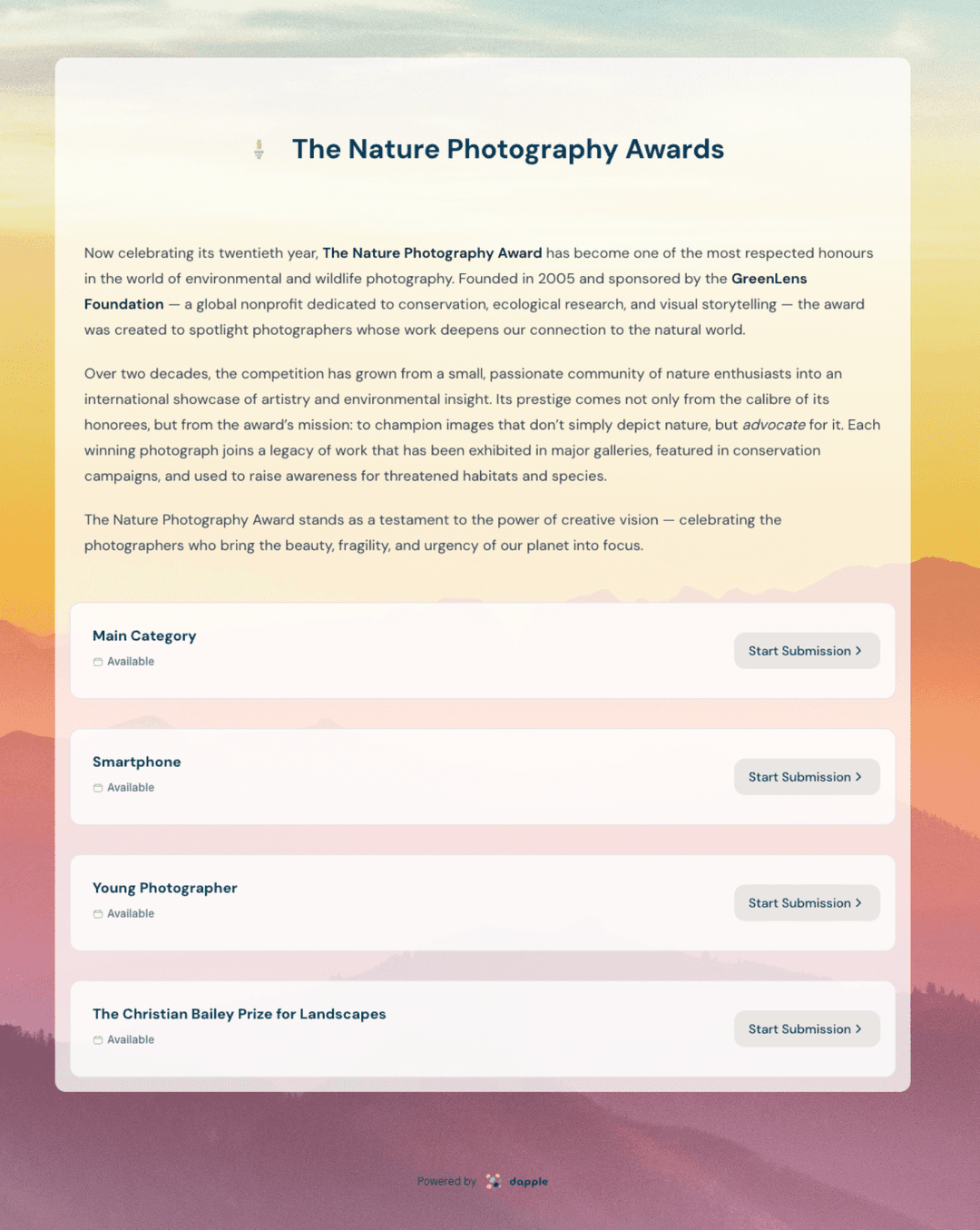
Categories are one of the most underestimated design decisions in any awards programme.
They don't just organise submissions — they actively influence who applies, how confident people feel submitting, how fair judging is, and whether your programme can scale without collapsing under its own weight.
Good categories give direction. Bad categories create friction, confusion, and resentment.
Categories as Guidance, Not Just Labels
From an entrant's perspective, categories provide affirmation that their work belongs.
Categories that are vague, overlapping, or overly clever quietly suppress submissions — especially from people who already feel uncertain about entering.
From an organiser's perspective, categories help you:
- Distribute workload across judging panels
- Recognise excellence in multiple ways
- Avoid comparing fundamentally different work
- Analyse submissions meaningfully after the fact
They are structural tools, not marketing fluff.
How Many Categories Is "Enough"?
There's no magic number, but there is such a thing as too few and too many.
- Very small programmes often struggle when they have only two or three categories. Too much excellent work gets forced into competition with itself, and deserving entries go unrecognised.
- Overbuilt programmes with dozens of categories overwhelm everyone. Entrants don't know where they fit, judges struggle to see significance, and the programme starts to feel inflated rather than prestigious.
A practical rule of thumb:
- Early or smaller programmes benefit from a handful of strong, well-defined categories
- Larger programmes earn the right to be more granular over time
For a first-year awards or contest, fewer categories done well will almost always outperform many categories done poorly.
And importantly: it's far easier to add categories later than to remove them. Expansion feels like growth. Retrenchment feels like failure.
Use Structure to Avoid Overwhelm
If your instinct is to create lots of categories, consider how they're organised.
Rather than presenting a long, flat list, think in terms of:
- Primary categories
- Sub categories
This creates a natural decision path for entrants instead of a wall of options.
For example, starting broad and narrowing down mirrors how people think — and keeps the process intuitive.
If your platform can't support grouped or nested categories, that limitation will surface quickly as your programme grows.
Category Names Should Do the Heavy Lifting
A category name should make sense instantly, without requiring someone to read a paragraph of explanation.
Strong category names:
- Are descriptive rather than aspirational
- Use familiar language
- Make eligibility obvious at a glance
Weak category names:
- Sound impressive but say nothing concrete
- Rely on buzzwords or internal jargon
- Require long explanations to decode
Cleverness rarely converts. Clarity does.
Consistency matters too. If you use one naming style, stick to it across all categories. Mixed conventions signal disorganisation and confuse how categories relate to one another.
Eligibility: Be Explicit, Even If It Feels Restrictive
Unclear eligibility is one of the biggest sources of frustration for both applicants and judges.
Every category should clearly define:
- Who can enter
- What kind of work qualifies
- When the work must have been created
- Any size, experience, or format constraints
Clear rules reduce:
- Incorrect submissions
- Disputes after judging
- Accusations of unfairness
They also save enormous amounts of admin time.
You should also think through edge cases before submissions open:
- Can the same work be entered into multiple categories?
- How do you treat collaborative work?
- What happens if someone's status changes mid-project?
Ambiguity here always becomes your problem later.
Pricing Categories Thoughtfully
Most programmes charge the same fee across all categories however you may want to charge different fees for different categories or even sub-categories.
Other models can also make sense depending on your goals:
- Reduced pricing for smaller organisations or early-career entrants
- Premium pricing for high-visibility or flagship categories
- Discounts for multiple entries
Differential pricing can improve access and increase overall participation but only if it's clearly explained. Complexity without clarity creates confusion and drop-off.
Common Category Pitfalls to Avoid
Some patterns show up again and again in struggling programmes:
- Categories that overlap so much applicants don't know which to choose
- Categories that are so broad judging becomes arbitrary
- Hyper-specific categories that attract almost no entries
- Trend-based categories that age quickly
- Categories written in language only insiders understand
- No category for work that doesn't fit traditional boxes
Each of these creates friction, not value.
When Categories Should Change
Categories are not set in stone.
You should consider splitting categories when:
- A single category attracts a very large number of entries
- Judges struggle to compare submissions fairly
- Feedback suggests people want more specific recognition
You should consider merging categories when:
- Some categories consistently receive very few entries
- Judges debate placement more than quality
- Recruiting specialist judges becomes difficult
- The distinctions matter more to organisers than to participants
Use real data, not instinct or tradition.
Let Categories Grow With the Programme
Healthy Awards programmes and contests evolve.
A sensible trajectory often looks like:
- Year one: a small, focused set of categories
- Year two: refinement and selective expansion
- Year three onward: strategic growth based on evidence
Be cautious once category counts get very high. At a certain point, excessive categorisation can signal dilution rather than prestige — especially if categories exist primarily to generate more fees.
If growth demands it, consider spinning off a new Awards completely rather than endlessly subdividing one.
Track category performance over time:
- Entry volume
- Entry quality
- Judge satisfaction
- Visibility and impact of winners
- Repeat participation
Categories that no longer serve the programme should be reworked or retired. Longevity alone is not a justification.
When categories are designed thoughtfully, they don't just organise your awards, they shape them.
Transparency, Trust, and Communication: The Long Game
Trust is the invisible infrastructure of any successful awards programme. Without it, everything else — pricing, marketing, judging, even great prizes — starts to unravel.
By the time someone submits to your awards, they have invested time, effort, creative energy, and often money. At that point, they are no longer just "applicants" — they are customers. They have paid for a service and expect that service to be delivered professionally.
Document Everything — Clearly and Publicly
Your website should leave as little room for doubt as possible. At a minimum, ensure the following are clearly documented and easy to find:
- Full timelines (submissions open, close, judging periods, results)
- Eligibility rules
- Judging criteria and process
- Prizes and what winners actually receive
- Fees and refund policies
- Who is judging (or how judges are selected)
- How and when applicants will hear from you
This information shouldn't live only on the website. It's good practice to reinforce key details inside the submission form itself, so applicants are reminded of what they're committing to at the point of action.
Clarity upfront reduces confusion later.
Stick to Your Timeline — Religiously
If you say results will be released on a certain date, release them on that date.
Timelines are not "aspirational." They are commitments.
Nothing damages trust faster than silence after a promised deadline has passed. Applicants will assume one of three things:
- Their submission has been lost
- The programme is disorganised
- They are being ignored
If something genuinely goes wrong — and sometimes it will — communicate early. Let applicants know before a deadline slips, explain why, and provide a revised date. People are far more forgiving when they feel informed and respected.
Keep Applicants Informed at Every Stage
Silence creates anxiety.
Applicants will regularly log into their accounts to check the status of their submission. If nothing changes for weeks or months, it invites doubt and frustration.
Best practice includes:
- Updating submission statuses as entries move through rounds
- Notifying applicants when they progress (or don't)
- Sending clear, timely messages at key milestones
Even a short message saying "Judging is underway — thank you for your patience" goes a long way.
Don't Create a Black Box
A lack of communication forces applicants to chase answers.
This leads to:
- Increased support tickets
- Repetitive emails asking for updates
- Extra admin time
- A perception of amateurism
Ironically, the more silent you are, the more work you create for yourself.
Clear, proactive communication reduces inbound queries and reinforces professionalism.
Judges, Changes, and Honesty
If you add, remove, or swap judges after submissions open, be transparent.
Applicants made a decision based on what was presented to them. If that changes, they deserve to know. Hiding updates or hoping no one notices erodes trust quickly.
Honesty may feel uncomfortable in the short term, but it preserves credibility in the long term.
Remember: This Is a Relationship, Not a Transaction
Awards are rarely one-off interactions. You want entrants to:
- Apply again
- Recommend your programme to others
- Trust future opportunities you run
That only happens if people feel:
- Seen
- Informed
- Respected
- Confident their time and money were well spent
Break that trust once, and many won't return.
Play the long game. Communicate clearly, stick to your word, and treat entrants the way you would expect to be treated if the roles were reversed.
Designing an Exceptional Judge Experience
Judges are not just reviewers — they are ambassadors for your awards.
They are often leaders in their field, busy professionals with established reputations and significant networks. Securing great judges is a privilege. Keeping them requires care.
A well-designed judging experience can dramatically elevate the credibility of your opportunity. A poor one can undo months of good work.
Always use Dedicated Software
Managing judging via email threads, spreadsheets, or shared documents quickly becomes chaotic. Version control breaks down, feedback is inconsistent, and admin overhead explodes.
Dedicated submissions and judging software is not a luxury — it's essential.
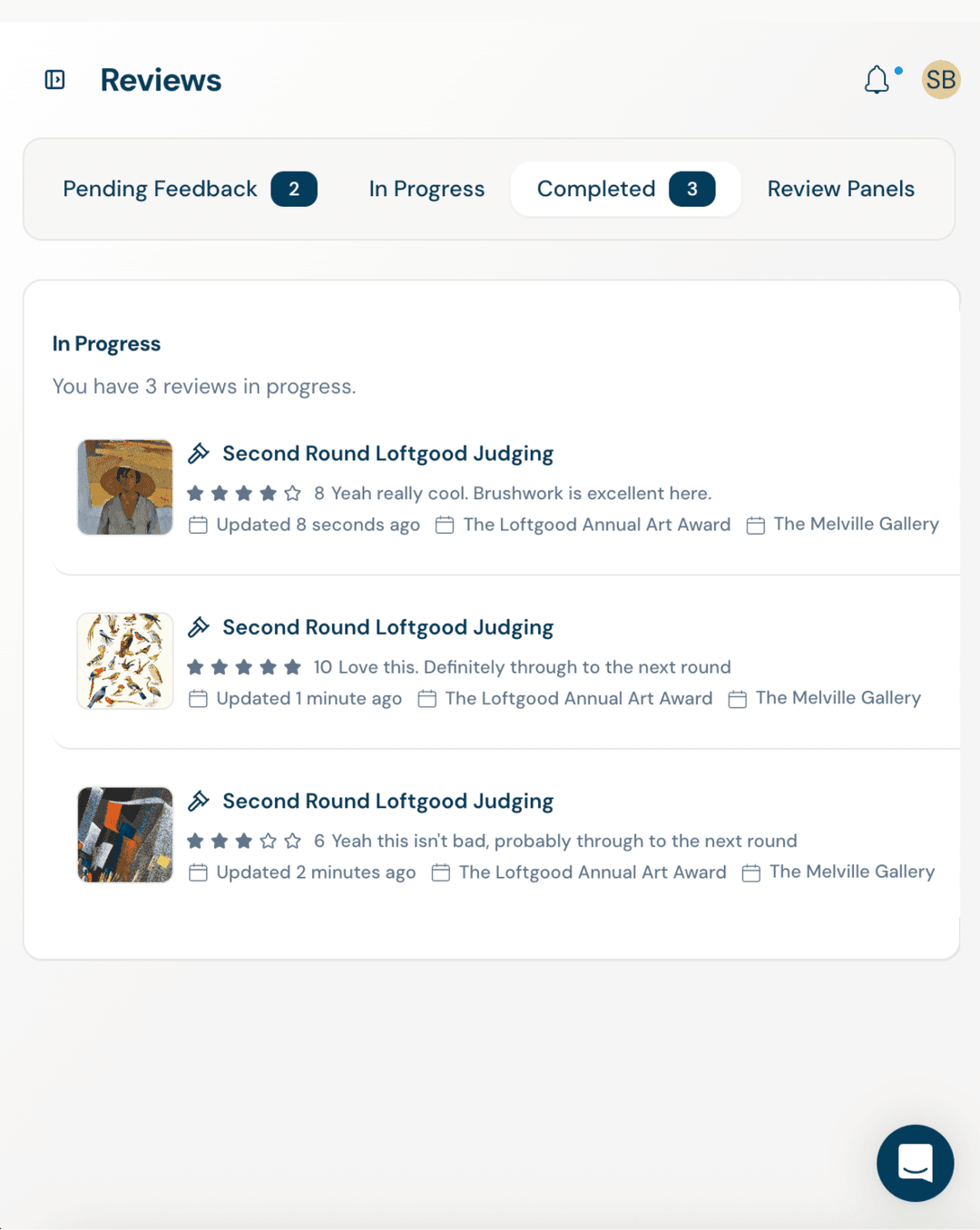
At a minimum, judges should:
- Receive a clear invitation email with access to their own account
- Log in without friction
- See a simple list of submissions assigned to them
- Review everything in one place
If judging feels fragmented or confusing, you're already losing goodwill.
Make Expectations Unmissably Clear
Judges need clarity from the outset.
Before they begin, they should know:
- What they are judging
- How many submissions they will review
- How long it should take
- The deadline they are working toward
Inside the judging platform itself, reiterate:
- The criteria
- What "good" looks like
- How scores should be interpreted
Clarity here is essential to fairness and consistency.
Keep Scoring Simple
Complex scoring systems don't produce better outcomes — they produce fatigue. Keep things simple.
Best practice:
- Score out of 5 or 10
- Add a simple yes/no or create an undecided option too.
- Avoid unnecessary sub-criteria unless they serve a clear purpose
Judges should be spending time evaluating work, not deciphering the scoring model.
Encourage Light Feedback (It's More Valuable Than You Think)
Ask judges to leave a short line of feedback where possible. Even a single sentence can be valuable.
This feedback can:
- Help you improve future programmes
- Support internal decision-making
- Be used (with permission) as quotes for marketing or impact reporting
Make feedback optional but encouraged, and easy to enter.
Respect That Judges Are External
Judges are often not part of your organisation. They may be giving time out of goodwill, interest, or professional alignment.
That means:
- Their time must be respected
- The process must feel worth it
- Frustration must be minimised
If the experience is smooth and enjoyable, judges are far more likely to return.
If it's messy, unclear, or admin-heavy, they won't — and they'll remember.
Deadlines, Reminders, and Reality
Judges are busy. Set deadlines that are:
- Realistic
- Clearly communicated
- Aligned with the volume of work required
Be upfront about expectations before they agree to participate.
And don't be afraid to send reminders. Polite, well-timed nudges are not annoying — they're helpful. Most judges appreciate them.
Make It Enjoyable
A good judging experience feels:
- Calm
- Focused
- Efficient
- Purposeful
When judges enjoy the process, several good things happen:
- They complete reviews on time
- They're open to returning next year
- They're more likely to share the opportunity with their network
A single social post from a respected judge can reach thousands of potential entrants. But that only happens if the experience earns it.
Design your judging process with the same care you give to applicants. When judges feel supported and respected, everyone benefits.
Why Fees Should Come at the End of the Submission Journey
If your awards programme or competition charges a submission fee, when you ask for payment is just as important as how much you charge.
In 2026, asking creatives to pay before they've even applied is a backward way to approach fee collection - literally.
Payment First Is a Legacy Behaviour — Not Best Practice
Historically, awards asked for payment upfront because it simplified manual administration. Payments were easier to track before digital systems existed to link submissions, accounts, and judging data together.
That context no longer exists.
Modern platforms can seamlessly connect applications and payments which means there is no longer a technical reason to ask people to pay first. What remains is habit, not logic.
Paying First Increases Drop-Off at the Worst Moment
Payment-first flows create friction at the very start of the journey — when trust is at its lowest and commitment is weakest.
From an applicant's perspective, they're being asked to:
- Trust an organisation they may not know well
- Part with money
- Before seeing the full application
- Before understanding the effort required
- Before feeling invested in the opportunity
Many will simply leave — not because they aren't interested, but because the risk feels too high too early.
Crucially, payment-first flows hide this loss. You may see a high "completion rate" after payment, but that ignores the much larger number of people who never started because they were stopped at the door.
Time Builds Commitment — Money Should Follow It
Behavioural data across ecommerce and digital services shows the same pattern repeatedly: people are far more likely to pay after they've invested time.
When applicants:
- Create an account
- Start filling in their submission
- Upload work
- Articulate why their work matters
They become psychologically invested. At that point, payment feels like a final step and not a gamble.
This is why virtually all modern digital services place payment at the end:
- You customise first, then pay
- You configure value first, then commit
- You understand what you're buying before you're charged
Awards should follow the same principle.
Payment Last Increases Revenue, Not Just Conversions
There's a persistent myth that payment-first increases revenue because people who pay are more likely to finish.
That may be true after payment — but it ignores the silent majority who never start because payment was demanded too early.
When payment comes last:
- More people start applications
- More people complete applications
- More people reach the payment step
- Total revenue often increases — even if individual conversion rates appear lower
What matters is not the percentage of people who finish once they pay, it's the total number of paid submissions you receive.
Payment Last Also Builds Trust
Trust is cumulative.
As applicants move through your process, they gather signals:
- Is this well designed?
- Is it clear?
- Is it professional?
- Do I feel respected?
Asking for payment only after they've experienced your system reassures them that:
- You're confident in the value of the opportunity
- You're not hiding anything behind a paywall
- You respect their time and decision-making process
Payment-first, by contrast, often triggers suspicion:
- "Why are they asking for money already?"
- "What happens if I don't finish?"
- "Is this legitimate?"
Capture Intent — Don't Lose It
Another major advantage of payment-last flows is visibility.
When someone starts an application but doesn't finish, you still know they exist. You can:
- Send draft reminders
- Offer help
- Clarify confusion
- Nudge them before deadlines
- Offer early-bird pricing or extensions where appropriate
With payment-first flows, those people disappear completely. You never know they were interested — and you lose the opportunity to convert them.
Draft submissions are not failures. They're high-intent leads.
The Principle Is Simple
If you want:
- More completed submissions
- Higher total revenue
- Better applicant experience
- Stronger trust
then payment should be the final step, not the first.
In 2026, asking creatives to pay before they apply doesn't protect your programme, it quietly limits it.
Design the journey so value is understood first, commitment is built naturally, and payment feels like a conclusion, not a barrier.
Diversity, Inclusion, and Fairness: Designing for Access, Not Just Intent
Diversity and inclusion don't happen by accident. They are the result of deliberate design choices — many of them subtle, structural, and easy to overlook.
If your goal is to attract a wide, representative range of creators, your awards programme must actively remove barriers rather than assume everyone starts from the same place.
Reduce Financial Barriers Where Possible
Entry fees are one of the biggest exclusion points.
Consider:
- Discounted or free entries for under-resourced creators
- Fee waivers for students, early-career practitioners, or specific communities
- Early-bird pricing, which allows those with fewer resources to plan ahead and pay less
- Optional donations rather than mandatory fees for publicly funded or access-first programmes
These mechanisms allow you to balance sustainability with accessibility — and signal that your opportunity is genuinely open.
Make the Opportunity Feel Welcoming
Creators often hesitate to apply not because they lack talent, but because they fear "getting it wrong."
You can reduce this anxiety by:
- Providing clear contact details for questions
- Explicitly encouraging applicants to reach out if unsure
- Reassuring entrants that questions will not affect their chances
If possible, offer a printable or downloadable version of the submission form so applicants can review requirements offline, plan their responses, or work at their own pace.
Clarity builds confidence.
Encourage (and Protect) Demographic Data
Demographic information is valuable for understanding who your programme is reaching — and who it isn't.
Best practice:
- Make demographic questions optional
- Clearly explain why you're asking
- Hide demographic data from judges to avoid unconscious bias
- Restrict access to this data to admin or reporting roles only
Fair outcomes depend on separating representation insight from selection decisions.
Design Forms for Accessibility
Roughly 1 in 10 people has some form of dyslexia, and many others experience cognitive overload, language barriers, or time constraints.
Design accordingly:
- Keep language simple and direct
- Avoid long blocks of text
- Use short labels and examples
- Limit the number of options per question
Offer Multiple Ways to Respond
Written responses are not neutral.
Where possible, allow alternatives:
- Short video responses
- Audio recordings
- Visual or portfolio-based submissions
Giving candidates a choice of medium allows people to communicate in the format that best reflects their strengths — while still answering your core questions.
This is particularly important for long-form prompts such as artist statements, motivations, or project explanations.
Use Conditional Logic to Reduce Overwhelm
Long forms are intimidating — especially when many questions are irrelevant to a particular applicant.
Use conditional logic so that:
- Certain answers reveal follow-up questions
- Irrelevant sections remain hidden
- Applicants only see what applies to them
This reduces form length, cognitive load, and drop-off — all while improving data quality.
Choose a Judging Panel That Reflects Your Audience
Applicants look at your judges — consciously or subconsciously — and ask: "Do people like me belong here?"
A varied judging panel:
- Encourages broader participation
- Reduces perceived gatekeeping
- Improves the legitimacy of outcomes
Representation matters at every stage of the process.
Keep Processes Simple
Complex, multi-step systems disproportionately exclude:
- People with limited time
- Those unfamiliar with digital tools
- Applicants with accessibility needs
If your process is difficult, the people most likely to drop out are often those you most want to reach.
Simplicity is not dumbing down — it's widening access.
Fairness Is a Design Outcome
Fair awards are not defined by intention alone. They are the result of:
- Thoughtful pricing
- Accessible formats
- Clear communication
- Bias-aware data handling
- Inclusive judging structures
When you design for fairness, diversity follows — and your programme becomes stronger, more credible, and more impactful as a result.
Marketing, Timelines, and Urgency: Getting the Right People to Apply
Even the best-designed awards programme will fail quietly without effective marketing. Submissions don't happen by accident — they happen because the right people see the right message at the right time.
Marketing awards is not about shouting louder. It's about distribution, repetition, and timing.
Start Marketing Earlier Than You Think
One of the most common mistakes is waiting until submissions open to think about marketing.
By then, you've already lost momentum.
Effective programmes start marketing weeks or months before submissions open, building familiarity so that when the call launches, people recognise it rather than encounter it cold.
Early-stage marketing allows you to:
- Seed awareness
- Build credibility
- Warm up your audience
- Create anticipation
Leverage Your Existing Network First
Your strongest marketing channel is the one you already own.
Start with:
- Your internal team's networks
- Advisors, partners, and collaborators
- Past applicants or supporters (if applicable)
- Sponsors and funders
Ask directly. People are far more willing to share opportunities when invited personally.
Provide:
- Short, ready-to-share copy
- Clear visuals
- Links that go directly to the application page
Lower the effort required to help you.
Activate Judges as Amplifiers
Judges are often highly respected voices with large, relevant followings.
If they've had a good onboarding experience, many will be happy to:
- Share the opportunity on social media
- Include it in newsletters
- Mention it in talks or posts
Make this easy:
- Ask early and politely
- Provide assets they can share
- Be clear about timing (e.g. when submissions open)
A single post from the right judge can outperform weeks of paid ads.
Encourage Applicants to Share
Applicants themselves are a powerful distribution channel.
Simple prompts can help:
- "Know someone who should apply? Share this opportunity."
- Badges like "I've Applied" or "Submissions Open"
- Light incentives (e.g. featuring early applicants on social media)
This creates social proof and extends reach organically.
Choose Social Platforms Strategically
Not every platform is right for every audience.
Ask:
- Where does my audience actually spend time?
- What format do they engage with most?
Rough guidelines:
- Instagram / TikTok: visual creatives, emerging artists, short-form video
- LinkedIn: professional creatives, agencies, business-focused awards
- X / Threads: niche communities, discourse-driven fields
Consistency matters more than volume. Pick a few channels and show up reliably.
Use Email and Newsletters Properly
If you have a mailing list, use it — but don't abuse it.
Effective email campaigns:
- Announce the programme
- Remind people when submissions open
- Highlight judges or prizes
- Reinforce deadlines and urgency
Segment where possible. A targeted email beats a generic blast.
If you don't have a list, consider partnerships with organisations that do.
Get Listed Everywhere That Matters
Opportunity listing websites are often high-intent traffic sources.
Create a list of:
- Industry-specific opportunity databases
- Creative call-out platforms
- Regional or national listings
- University and alumni boards
- Community forums
Submit early, as some listings take time to approve.
Treat this like SEO — small, consistent placements add up.
Pitch to Media, Blogs, and Publications
Editorial coverage can provide legitimacy as well as reach.
Target:
- Industry magazines
- Online blogs
- Curated newsletters
- Community platforms
Your pitch should be short and specific:
- What is the opportunity?
- Who is it for?
- Why does it matter now?
Most won't respond. That's normal. A few yeses can make a big difference.
Build Marketing Into the Timeline
Your programme timeline is full of natural marketing hooks. Use them.
Examples include:
- Announcing the opportunity
- Submissions opening soon
- Early bird opened
- Announce high volume and quality submissions received
- Added more hot-shot industry judges
- Second early bird opens
- Prize announcements
- Early bird closing
- Submissions closing soon
- Extensions of deadlines
- Final push before closing
- Next round or public voting
Plan these moments in advance so you're not scrambling later.
Create Urgency Without Panic
Humans procrastinate — even when interested.
Data consistently shows that 30–50% of submissions arrive in the final few days.
Urgency strategies include:
- Early-bird pricing
- Clear countdowns
- Limited category capacity
- Deadline reminders
- Final-call messaging
Urgency works best when it's genuine. False deadlines or repeated extensions damage credibility.
Running Marketing on a Budget
Marketing without a budget is possible — but it costs time and effort instead.
Focus on:
- Partnerships with aligned organisations
- Cross-promotion
- Earned media
- Community sharing
- Consistent organic posting
Budget or not, coordination matters. Align messaging across channels so people encounter the same opportunity multiple times in different places.
Visibility in a World of Chatbots
People increasingly discover opportunities via AI assistants and so trying to adapt to this new way of marketing is paramount.
To increase the chance of being recommended:
- Publish clear, indexable information
- Maintain up-to-date websites
- Be listed on reputable opportunity platforms
- Use consistent language across channels
More visibility = more chances to be surfaced.
Measure What's Working
Finally, track where submissions are coming from.
Simple attribution — even "How did you hear about us?" — can help you:
- Double down on effective channels
- Drop what isn't working
- Improve next year's campaign
Marketing is not a one-off task. It's a system — and the better you design it, the less you'll have to rely on luck.
AI, Scrutiny, and the Future of Awards
AI has fundamentally changed how creative work is produced.
As AI tools have lowered the barrier to creation, content output has increased exponentially. The result is simple and unavoidable: submission volumes have risen, and the nature of those submissions has changed. Awards and contests in 2026 must now assume that a portion of their entries will be partially or fully AI-generated — whether declared or not.
This does not mean AI-generated work is inherently invalid. But it does mean organisers must be far clearer about what is acceptable, what is not, and how work will be evaluated fairly.
Ignoring the issue doesn't protect your programme. It undermines it.
The New Reality Organisers Must Accept
- Some applicants will use AI responsibly as part of their process
- Some will use it heavily without disclosure
- Some will submit work that is entirely machine-generated
- Judges will increasingly encounter work that feels "polished" but hollow
Without guidance, this creates inconsistency, frustration, and reputational risk.
The goal is not to police creativity — it's to protect the integrity of your awards.
Best Practice in 2026
Be Explicit About AI Usage Rules
Silence creates loopholes.
Your guidelines should clearly state:
- Whether AI-assisted work is allowed
- In what capacity (ideation, drafting, editing, generation)
- Whether disclosure is required
Ambiguity invites misuse and disputes later.
Add Clear Declarations in the Submission Flow
Best practice now includes:
- A visible AI-use statement in the guidelines
- A checkbox asking applicants to declare AI assistance
- Optional fields for explaining how AI was used
This does two things:
- It encourages honesty
- It creates a paper trail if questions arise
Honest disclosure should never be penalised but how you treat deception is up to you.
Shift Evaluation Toward Intent and Process
Pure output-based judging is increasingly fragile in an AI-heavy world. A few ways you could think about trying to combat this:
- Ask about process, not just outcome
- Encourage context: why choices were made, not just what was made
- Look for evidence of authorship, iteration, and decision-making
Work created with intention and understanding almost always reveals itself.
Train Judges to Recognise AI-Generated Patterns
Judges don't need to be technical experts but awareness matters. There are many ways to spot AI in publishing but the most common signals include:
- Overly generic or polished phrasing
- Lack of personal, experiential detail
- Perfect structure paired with shallow insight
- Confident claims without concrete examples
None of these alone proves AI use but patterns matter.
Provide judges with guidance on:
- What to flag
- How to record concerns
- Who to escalate to
Use Flags and Internal Tags, Not Knee-Jerk Rejection
Instead of immediately discarding suspicious work:
- Allow admins to tag submissions internally
- Review flagged entries during shortlisting or finalist stages
- Apply consistent scrutiny rather than reactive judgement
This keeps the process fair and defensible.
Use Detection Tools Carefully — and Late
AI detection software can be useful — but it is not definitive.
Best practice:
- Run detection only on shortlisted or finalist work
- Treat results as signals, not verdicts
- Combine detection with human review and context
False positives are common. Over-reliance on detection tools risks excluding legitimate work.
What Not to Do
Do not:
- Use AI tools to judge the quality of creative work
- Auto-reject based on detection scores alone
- Outsource judgement to algorithms
AI can help reduce admin, summarise data, or assist communications — but it should never replace human judgement in evaluating creative excellence.
Results and the Celebration of Excellence
This is the most visible stage of the awards lifecycle, and the one people remember.
For entrants, this is the moment of validation. For judges, it's the payoff for their time. For sponsors and partners, it's where value becomes tangible. Get this stage right, and you dramatically increase the likelihood that people return next year.
Key actions to prioritise at this stage:
Validate Scoring and Resolve Discrepancies
Before announcing results, take time to sanity-check scores and resolve any anomalies. This may include:
- Reviewing outliers in judge scoring
- Ensuring eligibility rules were applied consistently
- Confirming no conflicts of interest affected outcomes
- Try to confirm that the works are genuine and not a work of AI.
Accuracy here protects your credibility and avoids awkward corrections later.
Notify Finalists and Winners Thoughtfully
Finalists and winners should hear from you directly and ideally before public announcements. Clear, timely communication allows them to prepare, share the news confidently, and feel respected by the process. You want all of those involved to shout about their experience, so facilitate this as much as possible.
Prepare Winner Assets in Advance
Make it easy for winners to celebrate and promote their success. This may include:
- Digital winner badges
- Certificates
- Press kits or media-ready assets
- Clear guidance on how and when they can share the news
The easier you make this, the wider your awards will travel. Make suggestions about the best way these can be shared on social media or within industry channels.
Host the Ceremony (If Applicable)
Whether online, in-person, or hybrid, ceremonies are powerful moments of community and recognition. Even small, well-produced events can leave a lasting impression when handled thoughtfully.
Capture Impact
Don't let the moment pass without documenting it. Collect:
- Testimonials from winners and finalists
- Short stories about what the award means to them
- Media coverage, social posts, and engagement metrics
A strong celebration phase strengthens your brand and creates momentum for future cycles.
Post-Season Review
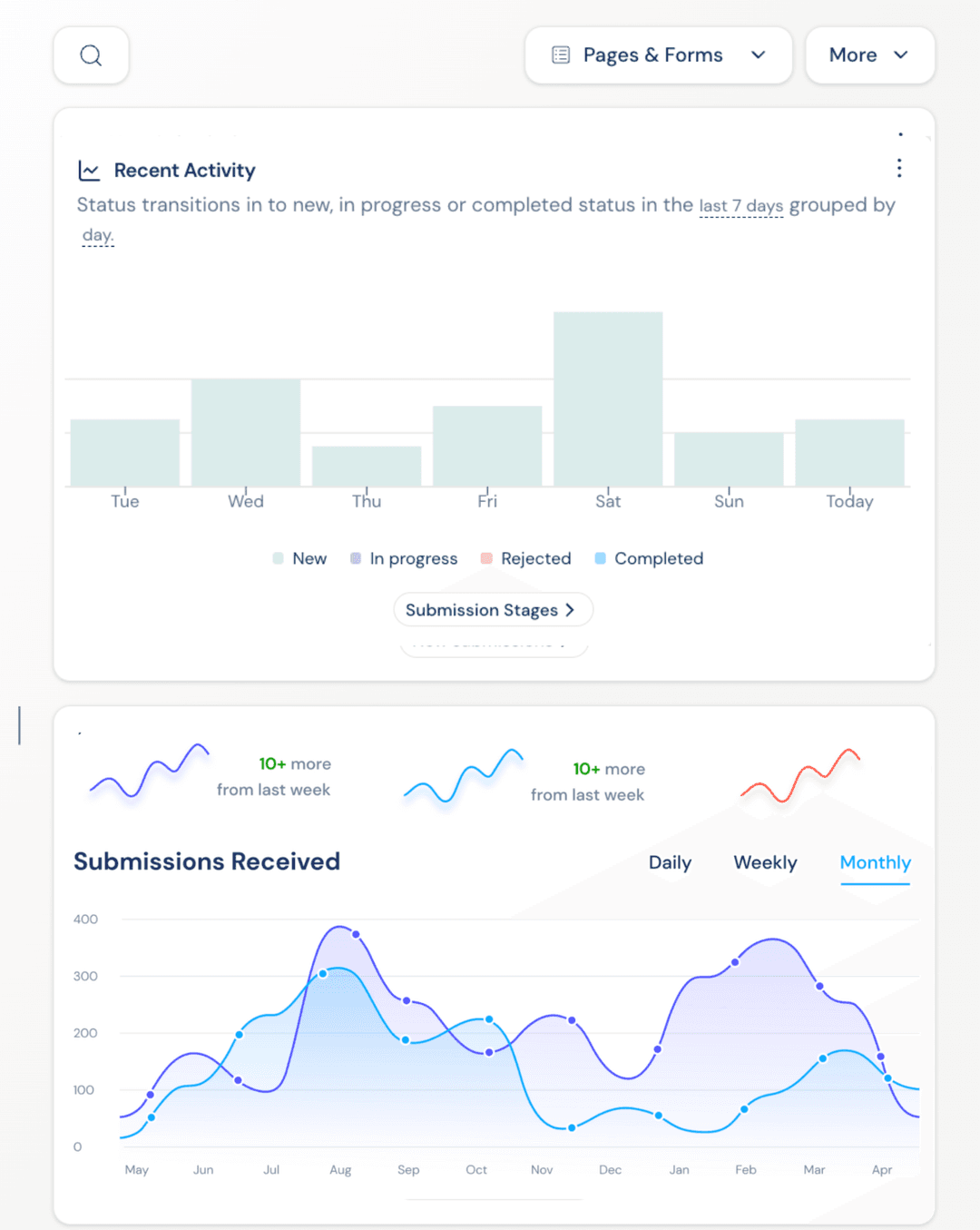
Once the awards or contest concludes, the real learning begins.
This phase is where good programmes become great and where long-term sustainability is built.
Key actions to take:
Compile an End-of-Season Report
Document what happened while it's still fresh:
- Submission volumes and trends
- Category performance
- Revenue and costs
- Engagement and reach
This becomes your internal reference point and benchmark for future planning.
Run Debriefs with Key Stakeholders
Schedule structured debriefs with:
- Your internal team
- Judges
- Sponsors or partners
Ask what worked, what didn't, and what caused friction.
Gather Feedback from Entrants
Entrants are often generous with insights when asked, especially if they did well! Short, focused surveys can reveal:
- Where people struggled
- What felt fair or unfair
- What would encourage them to return
Review Performance Against Original Goals
Measure outcomes against the goals you set at the start. Did the programme deliver what you hoped? Was it a success financially, culturally, or strategically? If not, why not?
Adjust for Next Year
Use what you've learned to refine:
- Categories
- Pricing
- Timelines
- Communication
- Tooling and automation
A structured review ensures that each cycle benefits from the last.
After a deepdive on the results of the current awards or contest, map out a rough outline of the next one. The more advanced planning you do while it's still fresh will only help with the next one!
Conclusion: What's Changed About Running Awards in 2026 and What That Means for You
Running awards in 2026 is fundamentally different from even a few years ago — not because the core purpose has changed, but because expectations, tools, and behaviours have.
Competition Is Fiercer Than Ever
There are simply more opportunities in the world now. More awards, more open calls, more prizes, more platforms competing for the same creators' attention. This means quality alone is no longer enough. Clear positioning, credibility, and a frictionless experience are what separate programmes people apply to from those they quietly ignore.
AI Has Changed the Rules
AI has dramatically increased the volume of creative output — and with it, submission volumes. Organisers are now required to think more critically about originality, intent, and process. Clear guidance on AI usage, thoughtful evaluation criteria, and greater scrutiny are no longer optional; they're part of doing the job responsibly.
At the same time, AI has also created opportunities. It can help reduce admin, improve communications, and free teams to focus on judgment rather than logistics. The challenge is using AI to support decisions, not replace them.
Tooling Has Finally Caught Up
The good news is that running awards no longer requires wrestling with clunky, inflexible software built for a different era.
Modern platforms are:
- Faster to set up
- More flexible
- Automation-first
- Designed around real user behaviour
Time-to-value has seriously decreased. What once took months of setup and training can now be done in a matter of hours. That changes what's possible for smaller teams, independent organisations, and first-time programmes.
Experience Is Now Non-Negotiable
Entrants, judges, sponsors, and partners all expect a modern, intuitive experience. This expectation doesn't come from awards platforms; it comes from the rest of their digital lives.
If your process feels outdated, fragmented, or confusing, it probably is and will immediately undermine trust. In 2026, professionalism is judged as much by how something works as by what it offers.
The Opportunity Has Never Been Greater
Despite the increased complexity, there's real opportunity here.
Organisations that:
- Design for fairness and inclusion
- Communicate transparently
- Remove friction ruthlessly
- Respect people's time
- Use modern tools thoughtfully
will stand out.
Awards that feel clear, credible, and human still matter deeply. They create momentum, open doors, and shape creative careers.
The difference in 2026 is simple:
Doing it well is no longer about scale or budget. It's about intention, systems, and execution.
Those who adapt will build awards, contests and competitions that don't just survive, but grow stronger year after year.
"Running our awards through Dapple was one of the best decisions we made in the whole process. They helped us get set up in a couple of hours, our entrants commented on how easy the process was, we found it so easy to manage and our judges loved it! Would highly recommend."
— Kayleigh M, Awards Manager
Explore More
How to Set Entry Fees for Creative Awards
Set competitive, fair, and sustainable entry fees for your creative awards and contests.
The 10 Best Practices for Submission Forms
Build streamlined, high-converting submission forms that creators actually complete.
6 Alternatives to Submittable
Compare the top Submittable alternatives for creative organisations.