Building the infrastructure for a new kind of fellowship
Evermay is an embassy for the future: a Washington DC institution creating protected space for long-horizon thinkers. When they launched their Future Fellows Program, they needed proper infrastructure to accept applications, run a rigorous review process, and manage everything in one place. Dapple gave them exactly that — at a price point that made sense for a programme just finding its feet.
Background
Who is Evermay, and what is the Future Fellows Program?
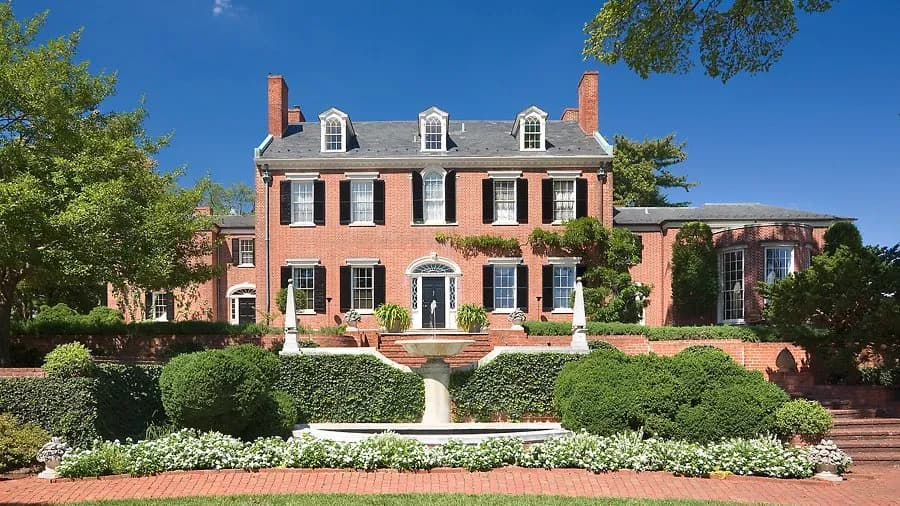
Evermay is a Washington DC institution founded by Dr. Sachiko Kuno and Kate Goodall — built on the conviction that some of the most consequential ideas take time, and that very few places truly support that. Housed at a historic four-acre Georgetown estate, Evermay exists to give extraordinary thinkers the space to pursue ideas that don't fit neatly into existing systems.
The Future Fellows Program is Evermay's flagship initiative: a residential fellowship bringing together scientists, artists, technologists, and thinkers to explore ideas that could shape the world ten or more years from now. The programme runs across three cohorts — summer, winter, and fall — and moves from open application through panel review, shortlisting, and final decision.
The Problem
What did Evermay need when they launched the Future Fellows Program?
Evermay was launching a brand new programme. They weren't porting an established process from one platform to another — they were building an application and review system from scratch. Earlier email-based approaches made it clear that managing meaningful volume without dedicated infrastructure was unworkable.
They needed one system for the full journey: custom intake, cohort organisation, independent reviewer accounts, panel scoring, visual stage tracking, and a clear route from shortlist to interview — while remaining affordable at launch and scalable as submissions grew.
"We're at the point of creating the application and getting ready to open it. We need something that can support both the application process and the review process on our end — and that scales with us as we grow."
— Allison Gent, Evermay / S&R Foundation
Getting Started
How did Dapple help Evermay get up and running quickly?
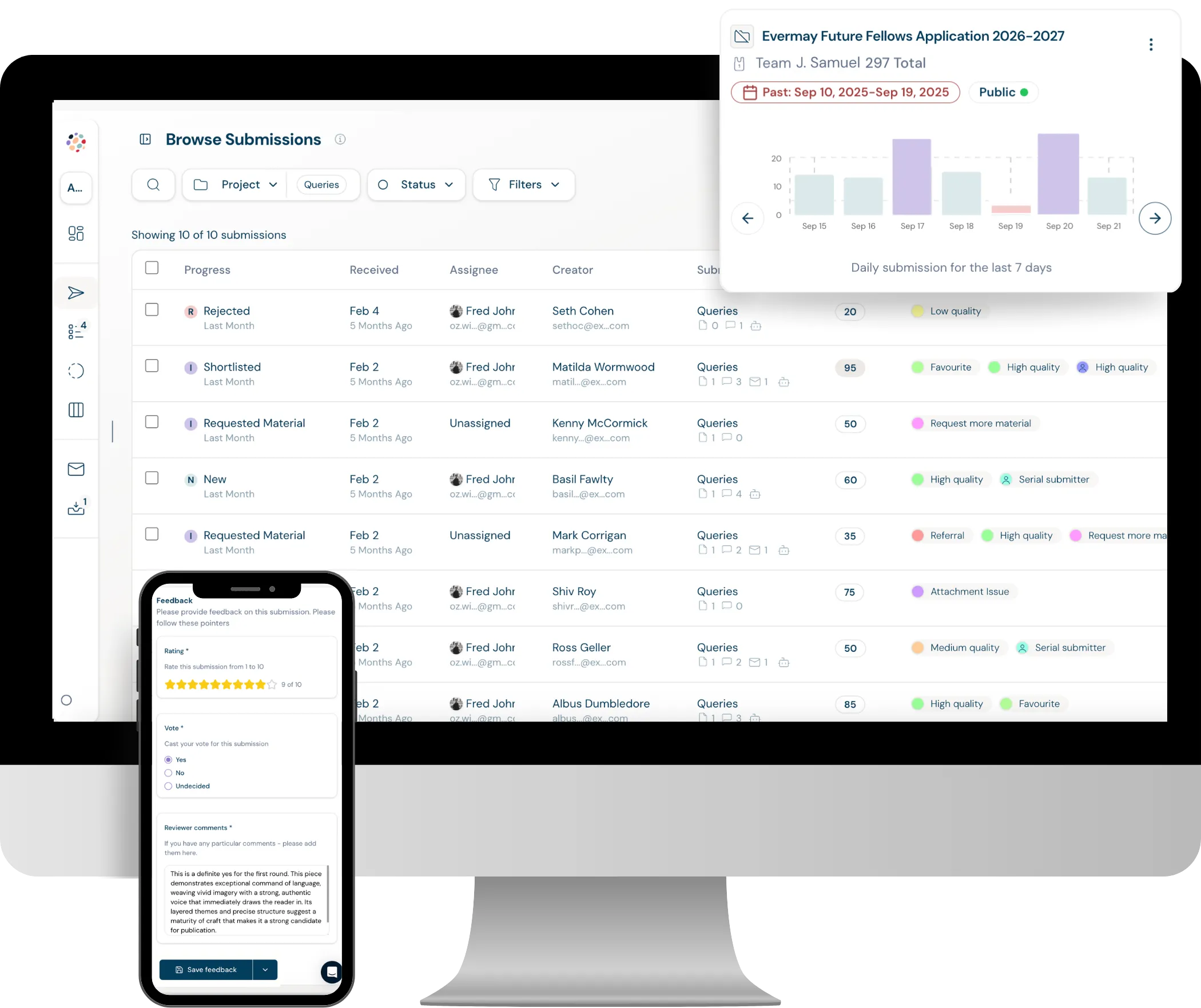
Evermay found Dapple while looking for a platform with form building, reviewer workflows, and automation in one place. After one demo, the fit was clear: the workflow requirements were covered out of the box, the interface was intuitive, and the pricing worked for a new programme.
Dapple's customer success team helped configure the process before launch. During the open call period, applicant questions were handled in-platform via support chat, reducing operational load on the Evermay team.
"It's super easy to use. I love the visual aspects and the different views. I feel like some of the other options didn't include the review process — you'd have to build that out yourself, or they didn't have the automation. Dapple just had everything."
— Allison Gent, Evermay / S&R Foundation
The Solution
How did Evermay build their Future Fellows application in Dapple?
Evermay built a fully customised application form designed specifically for Future Fellows — gathering the project, discipline, collaboration approach, and mission-fit context the review panel needed. To keep overlapping cycles clean, they ran separate projects for summer, winter, and fall cohorts, with applications automatically organised by cohort from intake.
Fully customised application form tailored to the Future Fellows brief
Branded, shareable public link distributed across Evermay channels
Separate projects per cohort (summer, winter, fall)
Cohort tagging for immediate organisation and filtering
All application materials and attachments stored centrally
Applicant portal with status tracking and messaging
Pricing
Why did pricing matter for Evermay at launch?
Evermay needed infrastructure that was robust enough for a rigorous review process but still practical for a programme in its early growth phase. Dapple's pricing gave them an affordable entry point while preserving room to scale as cohort size and submission volume increased.
Instead of combining multiple disconnected tools and hidden admin costs, they could launch on one platform with predictable pricing and full workflow coverage.
"The visual, the aesthetic, the ease of it, the price, the fact that it includes everything."
— Allison Gent, Evermay / S&R Foundation
Judging
How did Evermay run independent panel scoring across hundreds of applications?
Once a cohort closed, applications entered a structured multi-round review. Each panel member had a personal Dapple account and reviewed assigned applications independently before seeing others' assessments.
Reviewers scored, voted, and left written comments against each application. Evermay could track aggregate signal, identify strong consensus candidates, and escalate top applications with full context to Kate Goodall for final review.
Personal reviewer accounts with private, independent scoring
Scores, votes, and written comments saved per application
Round-one review managed across a multi-member panel
Aggregate view to identify consensus and edge-case candidates
Final-review escalation with full context in one record
"Each person on our review panel has their own personalised dashboard. They log in, see their pending assigned applications, and work through them — scoring, voting, leaving comments. All of that feedback comes back into our admin panel. We then decide who moves forward."
— Allison Gent, Evermay / S&R Foundation
Workflow
How were shortlisted applications escalated to final review and interview?
Evermay used Dapple's visual stages pipeline to move applications from intake to review, shortlist, final decision, and interview. The team always had a live view of where each candidate sat in the process.
The highest-scoring applications were surfaced for final review, with every form response, attachment, and reviewer comment available in one record — eliminating handoff friction.
Application open — custom form live via branded link
Cohort tagging and sorting — summer, winter, and fall separated
Panel review — independent scoring, voting, and comments
Shortlisting via stages — pipeline visibility at every step
Final review — Kate Goodall reviews complete shortlisted records
Interview stage — successful candidates moved forward with full context
Interview Stage
How did Dapple keep the candidate journey intact through to interview?
A common issue with mixed tool stacks is continuity loss between stages. When candidates move from application to interview in a different system, decision context fragments.
With Dapple, interview progression stayed on the same record. Candidates moved forward in-platform, and all application context — responses, documents, panel scores, and reviewer notes — remained available throughout interview decisions.
Candidates moved directly into interview stage inside the same system
No context loss between application, review, and interview
Form responses, documents, scores, and comments remain attached
Interview decision-making supported by complete application history
No cross-tool handoffs or fragmented records
Outcomes
What did Dapple give Evermay that they didn't have before?
Evermay moved from fragmented, high-friction application handling to a structured end-to-end process: tailored intake, isolated panel review, visual progression, final review, and interview continuity in one platform.
The result wasn't just operational efficiency — it was a programme process with the rigour and reliability needed for a fellowship designed around consequential, long-horizon work.
"Dapple just had everything we needed. We literally got set up in a couple of hours."
— Allison Gent, Evermay / S&R Foundation
Results
Before and after: what changed in Evermay's fellowship operations?
Dapple replaced manual, disconnected application management with one integrated operational system across intake, review, shortlisting, and interview progression.
| What was needed | Before | What Dapple delivered |
|---|---|---|
| A structured way to accept applications | No dedicated application infrastructure | Custom form builder tailored to the Future Fellows brief |
| Separation across three concurrent cohorts | Manual segmentation across cycles | Separate projects per cohort with tagging |
| Independent review panel scoring | No clean system for isolated reviewer assessment | Personal reviewer accounts with private scores, votes, comments |
| Visibility into application status | Hard to see where each candidate stood | Visual stages pipeline with clear status at a glance |
| Final review with full context | Material scattered across separate tools | All responses, docs, and panel feedback in one place |
| Continuation into interview stage | Context risk during handoff | Interview stage in Dapple with full record continuity |
| Applicant support handling | Queries likely to burden programme team | In-app support managed directly through Dapple |
| Affordable entry with room to scale | Uncertain platform fit at launch stage | Plans from $35/month, scalable with programme growth |
Most importantly, Evermay gained a process that matched the seriousness of the programme: independent review, decision transparency, and continuity from first application to final interview.
Why It Works
Why does Dapple work for new and growing fellowship programmes?
The Future Fellows Program reflects a common pattern: thoughtful, high-standard open calls that generate real volume and require independent review without overwhelming a small operations team. Without dedicated infrastructure, these programmes quickly default to inbox and spreadsheet chaos.
Dapple works because the full workflow already exists in one place — form builder, reviewer accounts, staging, and interview continuity — with an entry point that is viable for early-stage programmes and scalable as cohorts grow.
"Some of the other options didn't include the review process, or you'd have to build the automation yourself. Dapple just had it all."
— Allison Gent, Evermay / S&R Foundation