How the Salon Awards moved mid-cycle to Dapple and ran thousands of regional entries
The Salon Awards celebrate the best hairdressers, barbers and salon teams across the UK. Partway through their entry cycle, they moved to Dapple because their previous platform couldn't handle their categories, sub-categories and multiple entries.

Background
Who are the Salon Awards?
The Salon Awards are a set of regional awards for the hair industry. They recognise salons, stylists, barbers and teams county by county across the UK and Ireland. Entries are split into three main groups (Business, Individual and Team), and each group has its own sub-categories. That adds up to more than thirty awards, each run separately in every region.
The Challenge
Why did the Salon Awards switch platforms mid-cycle?
The Salon Awards switched mid-cycle from a platform called Zealous, chiefly because it couldn't split entries by category and region for judging, and their awards depend on that. Dapple is the fourth platform they've used, and each of the earlier ones had fallen short on something they needed.
Judging by category and region. Every entry is judged only against others in the same category and the same county or region. Judges can take more than one category but judge each region separately. That means splitting thousands of entries into batches and handing each batch to the right judge. Zealous couldn't do it.
Reliability on deadline day. Most entrants enter on the last day. Their earlier platform, Awardify, went down at exactly that point two years running, even after a server upgrade. Entrants gave up, the team had to persuade them to try again, and the deadline had to be extended. Judges found it unstable too.
Affordability. Their first platform, Evalato, was the only one that had handled their judging properly, but with pricing starting at £4,500 it became too expensive for their budget. Dapple works out at about 25% cheaper.
A simple flow for busy entrants. Salon owners, stylists and barbers aren't sitting at a desk reading instructions. The entry flow had to be very simple: one payment for a package of entries, one link per entry, and every category visible up front. Entrants also needed to be able to change their own category without asking the team.
Draft entries. Entrants were getting confused about entries they had started but not finished, and where to find them.
Entry data in the CRM. Entry data had to flow into their marketing CRM through Zapier, so entrants could be moved out of nurture emails once they had entered.
Moving mid-cycle added one more worry. People had already entered and paid on Zealous, and all of that data had to come across without anything going missing.
Migration
How did Dapple migrate entries from Zealous partway through the cycle?
Dapple's customer success team began by migrating every existing entry from Zealous into Dapple. The hard part was that some entrants had paid but hadn't yet submitted their entry materials. Those people had to be moved across without being charged twice or losing their place.
To handle this, Dapple created a secret link and unique Access Codes for every entrant who had paid on Zealous but hadn't uploaded anything yet. The Salon Awards sent the links to those entrants, who could click the links and then complete their entries in Dapple without paying again.
From the entrant's side, the move was close to invisible. From the organiser's side, every entry, old and new, was now in one place.
Entry Forms
How did Dapple handle different questions for every category?
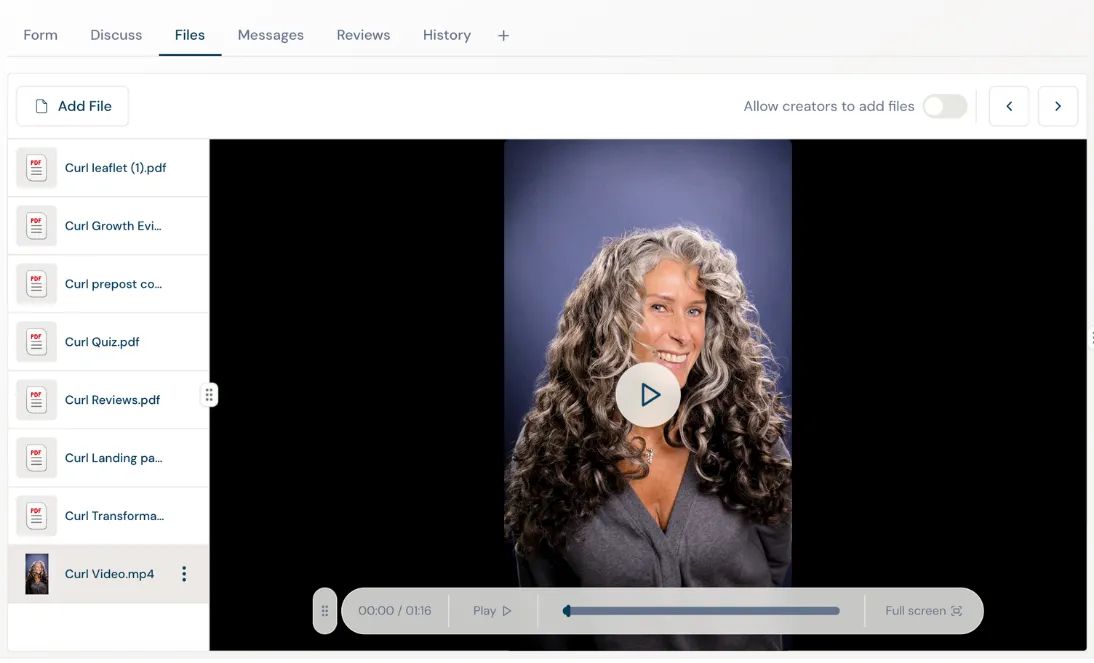
Dapple used conditional logic on the entry form. When an entrant picked their category, only the fields for that category appeared, so each entry captured the right information without entrants scrolling past questions that didn't apply to them.
The same logic controlled file uploads. Categories that needed a portfolio accepted multiple images and videos, and categories limited to one file enforced that limit automatically.
Payments
How did entrants pay for packages of entries?
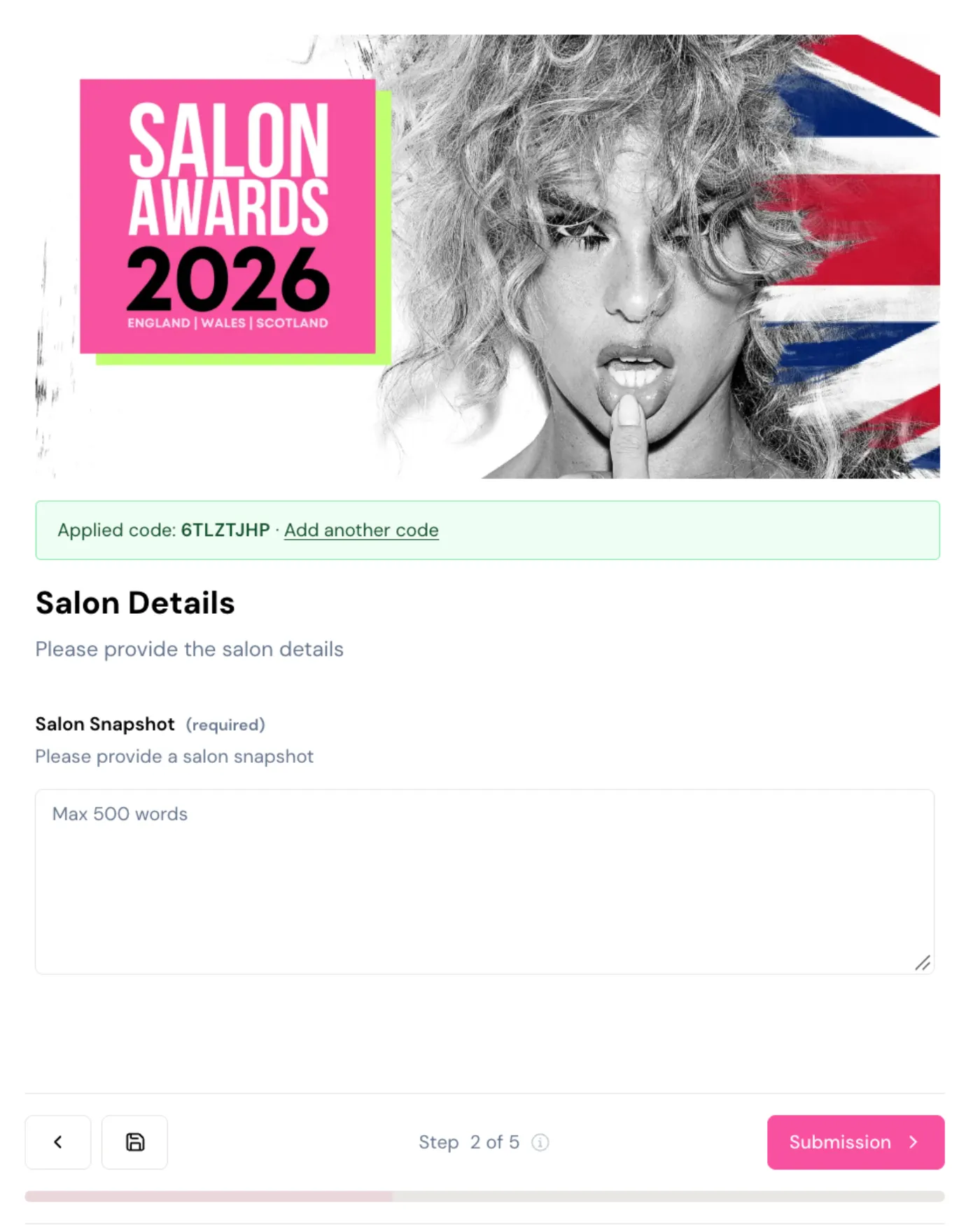
Like many awards, the Salon Awards take payment upfront. Entrants used Access Codes to choose a package of entries. Once payment came through, they received an email with a link to upload their main entry information and files.
Everything was kept in the entrant's personal Dapple account:
Links to every entry they'd paid for
Which links and Access Codes were unused, in progress or completed
Payment receipts
Invoices for businesses, with a field on the form where businesses could add their tax details for VAT purposes
So entrants could always see what they'd bought, what they still had to complete, and the paperwork they needed for their accounts.
Integrations
How did entry data reach the Salon Awards' CRM?
The Salon Awards used Dapple's stage-based webhooks with Zapier to send entry details straight to their marketing CRM. When an entry was made, Dapple pushed the entrant's details through automatically.
In the CRM, this triggered an SMS message asking the entrant to fill in their full entry details after their initial payment. The same data moved entrants out of nurture emails once they had entered, so nobody was asked to enter after they already had.
Support
How did the Salon Awards keep entrants supported and on track?
Dapple's support team was available throughout the cycle, and entrants used the live chat to get answers quickly. Questions came straight to Dapple and didn't land in the Salon Awards' inbox.
To recover lost revenue, the Salon Awards switched on Dapple's abandoned basket reminders. Entrants who had reached the payment page but left without checking out were nudged automatically to come back and pay.
They set up a separate flow for entrants who had already paid but still had entries they hadn't used. Those entrants were reminded to submit their materials before the deadline, with nobody on the team having to track them down by hand.
Sorting Entries
How did they sort thousands of entries by category and region?
The Salon Awards sorted their entries with filters and bulk tags in Dapple, so every entry landed in the right category and county.
Once entries closed, the most important job was sorting them correctly. With more than thirty categories, each split by county, the Salon Awards needed every entry in exactly the right group.
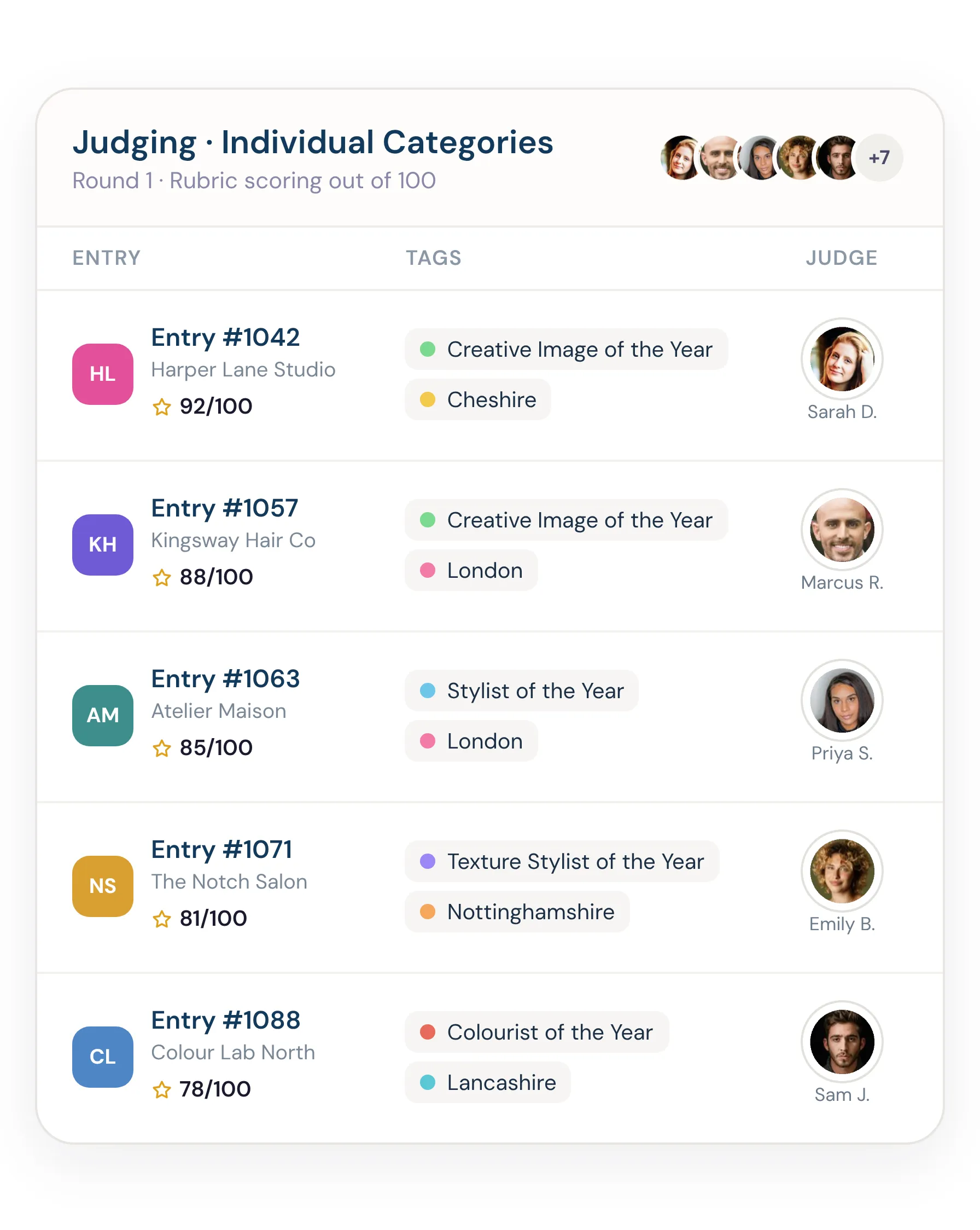
They used Dapple's tags. The team filtered the entries list by category and location, then bulk tagged the results with custom tags such as Barber of the Year and Cheshire. In a few clicks, thousands of entries were sorted into clear buckets, and every county's entries stayed separate.
Judging
How did judging work across different regions and categories?
With entries grouped, the Salon Awards assigned reviewers from each region to the right buckets of entries, so judges only saw the entries they were responsible for.
They set up separate stages and Review Rounds, each with its own scoring criteria suited to the category. A Business award could be judged on different criteria from an Individual or Team award, all within one project.
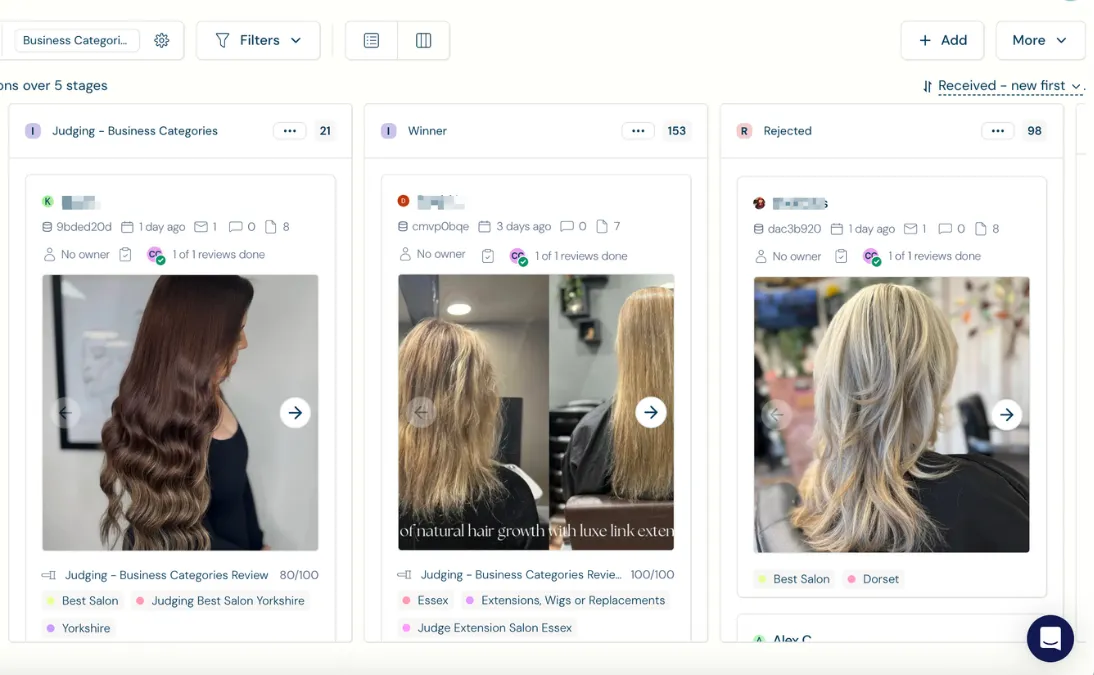
Some form fields were hidden from judges, for anonymity and to keep each entry simple to review. Judges could click into images, watch videos and open links directly from each entry.
Each judge worked through only the entries assigned to them and had no access to the admin dashboard. They could see the category tags too, so they could filter and group their entries in their own account and judge each region and category side by side.
Public Vote
How did the Salon Awards run their People's Choice Award?
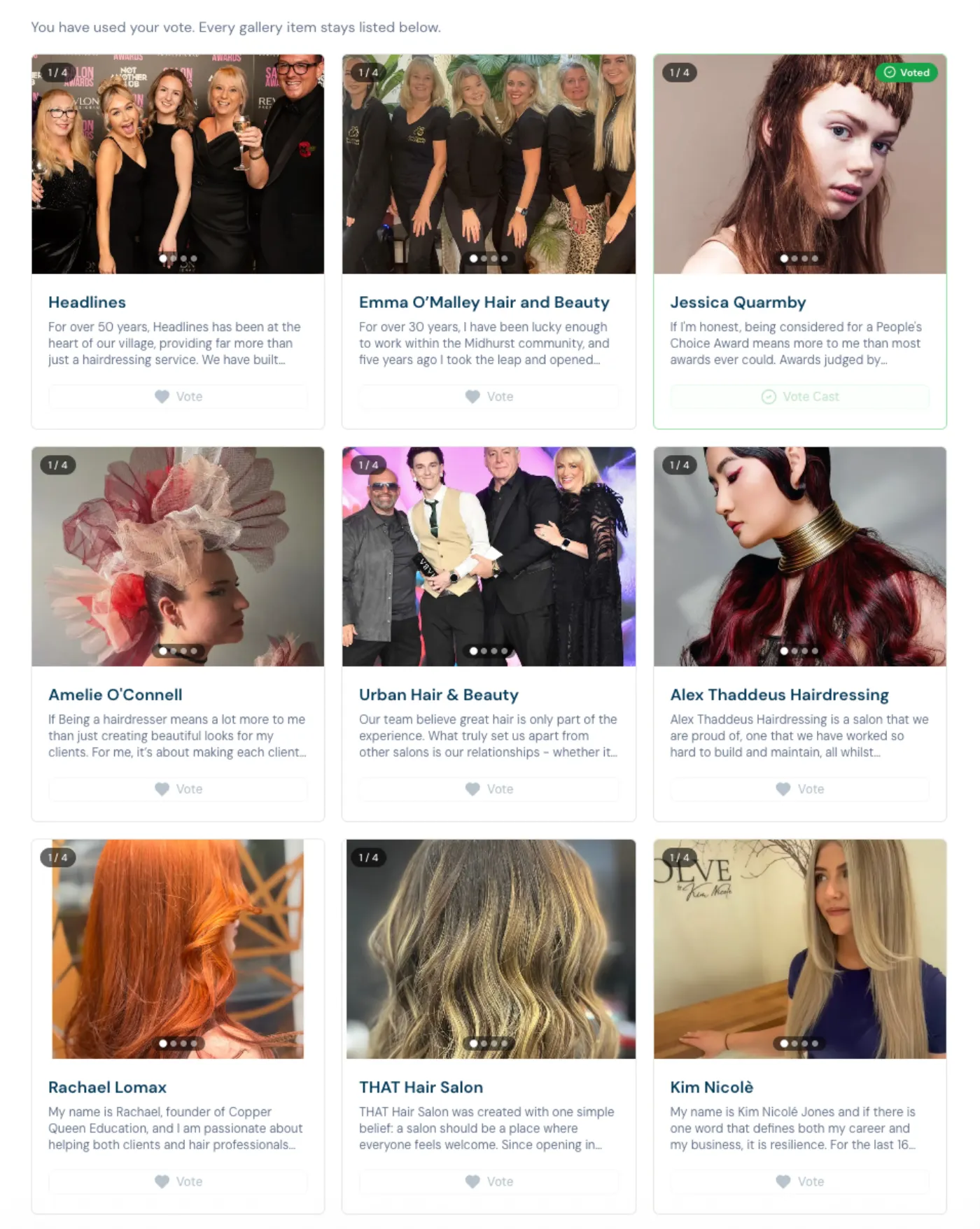
Entrants in the People's Choice category had their entries shown publicly with Dapple's Public Vote feature. Each entrant added a short pitch to the public and a selection of images.
The public voting page took only a few minutes to set up. Dapple displayed every entrant as a card on one public page, and the Salon Awards shared the URL with each entrant so they could promote it and collect votes.
More than 3,000 votes were registered
Results appeared in a live leaderboard and analytics graphs, visible only to the admin team
Vote verification helped keep the results fair
Winners & Ceremony
How did they choose winners and get everything ready for the ceremony?
When the judges' scores were in, the admin team sorted and ranked entries by score and moved them into Winner, Runner-up and Unsuccessful stages.
Two one-click exports finished the job:
Data export: all entry data in one spreadsheet
Bulk file export: a download of every attached image and video, ready to use in the awards ceremony itself
Results
What did the Salon Awards achieve with Dapple?
The Salon Awards ran the rest of their cycle on Dapple, from migrated entries and entry packages to regional judging, a public vote and ceremony exports.
| Area | Before Dapple | With Dapple |
|---|---|---|
| Category requirements | One form that couldn't adapt to sub-categories | Conditional logic shows only the right fields per category |
| File uploads | Couldn't mix multi-file and single-file rules | Multiple images and videos, or single-file limits, set per category |
| Paid-but-incomplete entries | Stuck on the old platform | Migrated, with secret links and Access Codes to finish entries |
| Payments and invoices | Scattered | Packages, receipts, invoices and VAT details in each entrant's account |
| Regional grouping | Manual sorting | Filter and bulk tag by category and county |
| Judging | One-size-fits-all | Regional reviewers, separate stages and per-category scoring |
| People's Choice | Separate process | Public Vote page, leaderboard, analytics and verification |
| Ceremony prep | Downloading files one by one | One-click data and bulk file exports |
Summary
Why does Dapple work for large regional awards?
Regional awards are among the most complicated programmes to run. They have dozens of categories, each repeated in every county, with different questions, file rules, judges and scoring. The Salon Awards needed a platform that could take over partway through a cycle, carry existing entrants across, and then handle every stage from payment to ceremony.
Dapple gave them adaptable forms, flexible entry packages, accurate regional grouping, structured judging and a public vote, all in one place. That left the team free to focus on the ceremonies.